(10-II- 1951 † 15 -IX- 2020)
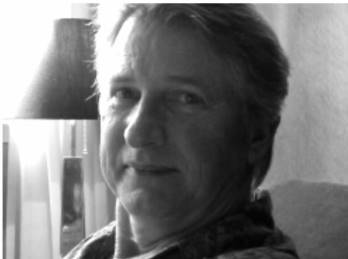
It is with deep sadness that the Inter-American Tropical Tuna Commission and its staff share the news of the passing of Dr. Richard (“Rick”) Bruce Deriso, on September 15 after a long and courageous struggle against a cruel illness. Before his retirement three years ago, in October 2017, he had been the first to be appointed Coordinator of Scientific Research under the Antigua Convention after its entry into force in 2010. He was a brilliant student and researcher, wellknown author of the “Deriso model” and his contribution to the Commission and its work was invaluable and his loss great, and he will be sorely missed by all his colleagues and friends.
x-x-x-x
Rick Deriso was a student of R. Ian Fletcher at the University of Washington in the 1970s. This was a time when stock assessment consisted of closed-form procedures like fitting a Schaefer model or doing cohort analysis or Beverton-Holt yield per recruit calculations. In fact, computing facilities were still so primitive and expensive that students still looked up yield per recruit values in printed tables. Fletcher’s approach was different. He was an applied mathematician. He wanted to find solutions to problems, and he was more than willing to find numerical solutions if a closed form wasn’t available. “Let’s do some computing,” he’d say, “Let’s find some answers.”Deriso’s Ph.D. dissertation was the derivation and evaluation of delay-difference models (Deriso 1980), which provide a compact representation of the biomass dynamics of a stock with knifeedge recruitment and a certain simple growth schedule. In Deriso’s words, such models make it possible to “implicitly account for age structure of the population without knowing it.” Parameter estimates were located numerically, and while the values obtained for some example stocks were of the right magnitude, they were very imprecise. For that reason, delay-difference models have almost never been used as a standalone assessment method, but they found a role as the biomass accounting engine in stock reduction analysis (Kimura et al. 1984).
After completing his Ph.D. in 1978, Deriso went to work for the venerable International Pacific Halibut Commission (IPHC) in Seattle. It was venerable because its first director, W.F. Thompson, had invented stock assessment and gone on to rescue the stock and the fishery in the 1930s. But after that the staff did very little professional-level assessment work for decades (although Doug Chapman was brought in from the University of Washington to do some routine Schaefer modeling and yield per recruit calculations in the early 1960s). When Donald A. McCaughran became director in 1978, one of his first steps was to hire two young quantitative scientists to revive the population assessment and management strategy. He chose well in recruiting Deriso and Terrance J. Quinn II, a student of Chapman’s. Fletcher said at the time that he expected Deriso and Quinn would “stir things up over at the Halibut Commission.” They did that and more.
The decade of the 1970s was a time of rapid advances in mathematical modeling generally. Affordable computing power was increasing exponentially year by year, and a number of seminal papers on numerical model fitting algorithms were published, including the definitive papers on the quasi-Newton methods that have been the workhorses of modelers ever since. Young scientists like Deriso and Quinn who were early adopters of the new methods had the opportunity to apply them to a number of old problems, and they did so energetically and capably.
At IPHC Deriso and Quinn and Philip R. Neal, motivated by a paper by Fournier and Archibald (1982), developed and fitted a model of commercial catch at age and catch per effort data that they dubbed CAGEAN, short for catch-age analysis (Deriso et al. 1985). This method proved to be a great improvement on cohort analysis as a method of estimating present stock abundance. There had been a few earlier papers on numerically fitted models of catch at age data, but the parameter estimates were generally very unstable if there was any variance in the catch at age estimates, which of course there always was. CAGEAN estimates were quite well behaved, first because the parameter set was reduced by adopting a separable model of fishing mortality, and second because auxiliary information, in this case commercial CPUE, was included in the fit. IPHC staff also distributed the model and the Levenberg-Marquardt minimization routine as a package (in FORTRAN) that by the standards of the day was quite easy to use. CAGEAN was used for the annual halibut stock assessment from 1982 through the mid-1990s, years after Deriso left the Commission.
Like the work of Thompson in the 1930s, CAGEAN raised the standard for all stock assessments, at least in North America. It was the first integrated, flexible, numerically fitted model to be thoroughly studied and tested and then put into routine use in managing a major fishery. Other agencies rose to the standard later in the 1980s and 1990s. The ideas underpinning CAGEAN were not entirely original, but the careful analysis and practical application of the approach by Deriso and Quinn at IPHC served as a demonstration of what could and should be done routinely.
This period also saw important work at IPHC in the area of simulation modeling as a method of evaluating harvest strategies. The lead scientist in this work was Ana M. Parma, a student of Chapman and Deriso at the University of Washington in the 1980s who joined the staff after completing her degree. Work done in the late 1980s was especially concerned with the effect of apparently cyclical variation in recruitment, and later the effect of regime shifts.
Quinn left IPHC for an academic career in 1985. Deriso went to the Inter-American Tropical Tuna Commission (IATTC) in 1988. They later published a treatise on fish population dynamics and models, dedicated to Fletcher (Quinn and Deriso 1999).
Dr. James Joseph, then IATTC Director, recognizing Rick's outstanding skills and expertise, recruited him as a Senior Scientist. Within a year he was appointed Chief Scientist of the Tuna-Billfish Program, and upon the entry in force of the Antigua Convention in 2010, became the IATTC’s first Coordinator of Scientific Research, in charge of the staff’s investigations. His contribution in this new position was essential for helping to ensure a smooth and efficient transition in response to the changes resulting from the entry in force of the new convention.
Rick’s work at the IATTC was more directed to research planning, staff coordination, and providing scientific advice. As Rick was brought into the Halibut Commission to invigorate and modernize their stock assessment work, Rick was instrumental in invigorating and modernizing the IATTC assessments by employing George Watters and Mark Maunder. This lead the IATTC to evolve from the traditional approach of cohort analysis to the contemporary integrated analysis, for which Rick’s early work at the halibut Commission was a foundation.
Despite the new role, Rick was still able to find time for research. He collaborated with several members of the IATTC staff on projects ranging from technical aspects of stock assessments to policy advice. He was deeply involved with early IATTC assessments of swordfish with Michael Hilton. He collaborated extensively with Mark Maunder on a range of subjects and they coauthored numerous publications and reports. Their work pioneered modern use of statespace models and the appropriate inclusion of covariates in stock assessment models that allowed for variance estimation and hypothesis testing. Rick continued his work on stockrecruitment models, which he was a pioneer of early in his career. Rick also directed and was involved in much of the early work on reference points, harvest control rules, and risk analysis that now forms the basis for the scientific advice and management actions that are currently used at the IATTC.
The beginning of Rick’s tenure at the IATTC also coincided with the early development of the research program for early life history studies at the IATTC’s Achotines Laboratory in Panama. Although he was not a fish ecologist, Rick appreciated good research and took great interest in the studies being conducted at Achotines. Over several decades, Rick supported the development of innovative research topics on pre-recruit survival, including the association between yellowfin recruitment and larval growth as well as the effects of wind-induced microturbulence on yellowfin larval survival. He was particularly proud of the unique research collaborations that were developed between the Achotines Laboratory and Japanese research organizations, including the Overseas Fishery Cooperation Foundation and Kindai University.
Outside the IATTC, he served on a multitude of scientific committees and review panels, for the National Research Council, the Western Pacific Fisheries Management Council, and the International Seafood Sustainability Foundation, among many others. He was on the faculty at the University of Washington and Scripps Institution of Oceanography, and his book Quantitative Fish Dynamics, coauthored with the late Terrance J. Quinn, remains one of the definitive works on the subject.
Rick’s extensive experience and well-deserved reputation for rigorous analysis also led to his engagement by the Metropolitan Water District of Southern California as an expert to address one of the most significant species protected under the federal Endangered Species Act in the United States—the delta smelt. For nearly half a century, management of this species has been embroiled in controversy with competing hypotheses and debates over the influential stressors that are important to the delta smelt population, made all-the-more contentious due to the consequential nature of the restrictions imposed on California’s water supply. Notwithstanding the data and research that had been compiled over decades, Rick was immediately surprised (and slightly bemused) to discover that no quantitative lifecycle model for this important species had ever been developed. Together with other researchers, he quickly set to work in developing a state-space multistage lifecycle model. Given the available data on population abundance for the smelt’s various life stages, as well as the data with respect to potential stressors, in a matter of months they had a model taking shape. In the process, Rick was called upon to testify in federal court, where he educated the stakeholders, the attorneys, and the judge on the necessity of using these scientific methods for species population management. Although there were divergent interests involved in the case that were motivated to find a way to undermine his testimony, Rick’s performance was unassailable because he knew (with his characteristic quiet confidence) that the approach and modeling were sound. Before long, the model was refined, peer reviewed, and published, and its development ensured that management of this species would forever going forward be guided by quantitative lifecycle analysis. Rick also worked on the scientific components of litigation relating to Pacific herring and Columbia River salmon.
Rick was a mentor and an inspiration for many of the IATTC staff. He was widely respected throughout the fisheries science community, and constantly in demand as an expert in the areas of fisheries population dynamics, quantitative ecology, stock assessment, applied mathematics, and statistics. He also always had time for his colleagues, and during his tenure built the IATTC research team into what it is today. He was always supportive, considerate, and willing to share his extensive knowledge, keen insights, and sharp mathematical intuition.